Taxes included.
All taxes & duties included. Free global shipping over $58.8
Quantity
Couldn't load pickup availability
📿 Blessing & Empowerment Meaning
📿 Blessing vs. Empowerment: The Spiritual Essence
Both rituals channel sacred spirituality into your piece, but they fulfill two distinct energetic purposes:
✨ Sacred Blessing
The Divine Shield for Peace & Security
The Sacred Ritual: Performed by eminent monks or senior Taoist priests through scripture recitations and mantras, endowing the item with divine spiritual significance.
The Duration: A one-time sacred consecration. Once blessed, the item permanently becomes a holy carrier of spiritual protection.
What It Brings You: Acts as a spiritual shield—warding off negative energy, offering deep inner peace, and giving you courage and comfort through life’s hardships.
⚡ Energy Empowerment
The Dynamic Power of Mindfulness & Intention
The Sacred Ritual: Transmits aspirational power and positive mindfulness into the item, creating an active energy bridge between sacred rituals and your everyday life.
The Duration: A repeatable, ongoing connection. Its spiritual resonance can be continuously recharged and strengthened through prayer, recitations, or your own mindfulness practice.
What It Brings You: Awakens your inner strength, aligns your daily intentions, and amplifies your personal energy field.
💡 Every piece is both a sacred protector for your soul and a daily energy companion for your mind.
⛩️ Sacred Origin & Consecration
⛩️ Sacred Origin: Blessed at China’s Foremost Holy Sites
Every piece in our collection is consecrated at Asia’s most revered spiritual sanctuaries—renowned UNESCO World Heritage sites and ancient monasteries with thousands of years of lineage.
📿 Sacred Buddhist Pilgrimage Sites
Our Buddhist-inspired pieces are blessed at the legendary Four Sacred Mountains and historic ancestral temples:
Mount Wutai & Mount Emei: Sacred peaks of Wisdom & Universal Virtue (UNESCO World Heritage Sites).
Mount Putuo & Mount Jiuhua: Holy sanctuaries of Compassion & Spiritual Protection.
Ancient Millennial Temples: Consecrated at historic spiritual centers including Lingyin Temple (Hangzhou), Jiming Temple (Nanjing), and the Potala Palace & Kumbum Monastery in Tibet.
☯️ Sacred Taoist Ancestral Courts
Our Taoist-inspired pieces channel the living energy of Nature and Balance, blessed at the origins of Taoism:
Mount Wudang & Mount Longhu: The world-famous birthplaces of Taoist philosophy and martial arts (UNESCO World Heritage Sites).
Mount Sanqing & White Cloud Temple: Revered ancestral courts of harmony, longevity, and spiritual cultivation.
💡 When you wear this piece, you are not just wearing jewelry—you are carrying the living peace, energy, and spiritual legacy of these sacred mountains.
🎁 Quality, Skin-Friendly & Gifting
Every piece at LuckyCharms.Shop is crafted for daily comfort, timeless elegance, and meaningful gifting.
🌿 100% Skin-Friendly & Hypoallergenic: Certified lead-free, nickel-free, and non-toxic. Crafted gently for even the most sensitive skin—comfortable for daily, sleep, or shower wear.
🎁 Gift-Ready Presentation: Arrives beautifully packed in a signature jewelry pouch with a meaningful wish card, ready to present right out of the box.
📦 100% Discrete Shipping: We never include pricing or invoices in the package, making it seamless to ship love and blessings directly to your recipient's doorstep.
🛡️ 90-Day Price & Satisfaction Promise
We want you to enjoy your new spiritual pieces without worrying about price drops or quality concerns.
💰 90-Day Price Protection Guarantee: If an item you purchased goes on sale within 90 days, simply contact us, and we will gladly refund you the price difference.
✨ 3-Month Peace of Mind Protection: From the day your package arrives, your order is fully covered for 90 days against any quality or crafting issues.
💬 24/7 Dedicated Support: Got questions or need help? Just drop a line to our friendly team at support@luckycharms.shop—we’ve got you covered!
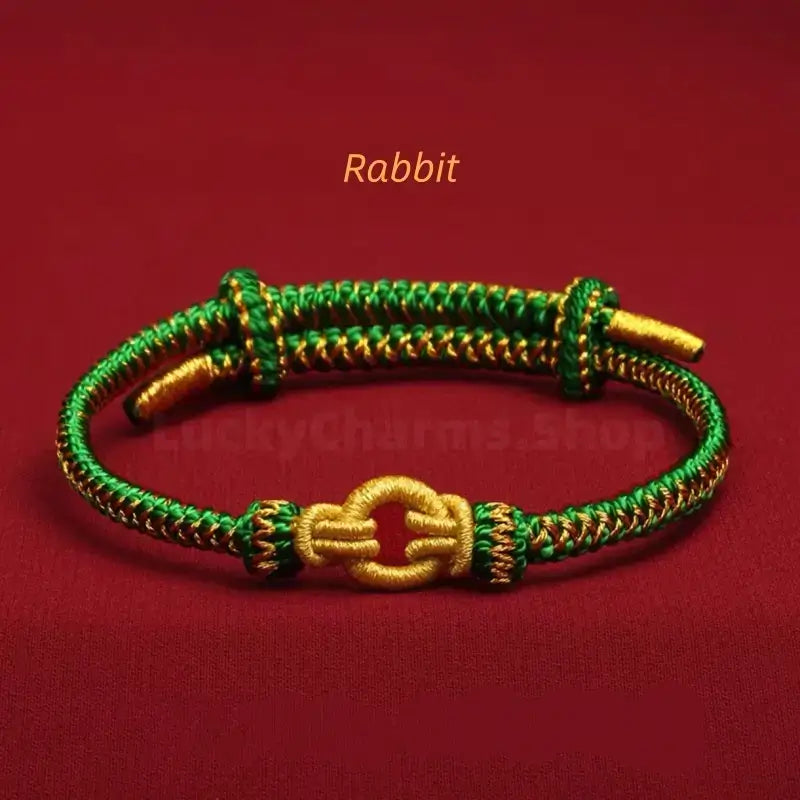
Bring personal identity, fluid balance, and vibrant textile artistry into your daily wristwear. Inspired by the serene natural heritage of Mount Longhu—a celebrated center of classical Eastern Taoist philosophy—this minimalist braided bracelet features a hand-woven 9mm "Heaven-Earth" ring accent (Qiankun Knot). Crafted entirely from 100% soft, hypoallergenic cotton cordage in 12 distinct colorways tailored for each astrological sign, it offers a metal-free, skin-friendly daily touchstone for personal focus, resilience, and quiet composure.
☯️ Braided Cotton Heaven-Earth Ring (9mm): A timeless woven Asian geometric knot symbolizing cosmic harmony, fluid adaptation, and structural balance.
🧵 100% Soft Natural Cotton: Completely metal-free, lightweight, and non-abrasive—engineered for maximum skin comfort and all-day wear.
🐉 12 Tailored Zodiac Colorways: Features curated color palettes reflecting the distinct elements and character of each Eastern zodiac sign.
🔥 WHY YOU’LL LOVE IT
✨ 100% Textile & Metal-Free Build: Crafted entirely from woven cotton fibers, making it ideal for sensitive skin and effortless water-friendly daily wear.
✨ Personalized Zodiac Options: Choose your birth-year colorway to celebrate individual heritage, milestones, or personal identity.
✨ Effortless Adjustable Slip-Knot: Features a smooth sliding closure designed to accommodate a wide variety of wrist sizes comfortably.
🎁 A Heartfelt Heritage Gift: Beautifully wrapped in signature presentation packaging—a perfect birthday, new year, or milestone gift for loved ones.
Center Ring Motif: Hand-Braided Cotton Heaven-Earth Ring (Approx. 9 mm outer diameter)
Cord & Ring Construction: Pure Textile Weave Construction
Color Options: 12 Multi-Color Variants (Tailored to Chinese Zodiac Signs)
Closure Type: Fully Adjustable Sliding Slip-Knot Construction
Cultural Provenance: Mount Longhu Heritage Inspiration, China
Care Instructions: Machine or hand washable with mild soap. Air dry thoroughly to maintain vivid cord color integrity.
✈️ Seamless Worldwide Delivery: All customs duties, import taxes, and clearance fees are 100% pre-paid by us—zero unexpected charges at delivery. Fast global shipping available!
Eastern Wisdom, Modern Blessings.
Order your Heaven-Earth ring zodiac braided cotton bracelet today at www.luckycharms.shop!
Frequently Asked Questions
How do I know these items are genuinely blessed?
Each sacred piece in this collection undergoes a traditional cleansing and blessing ritual. We include a dedicated Spiritual Consecration Card with your order, detailing the ritual and meaning behind your treasure.
Can non-Buddhists or non-Taoists wear these items?
Absolutely. These sacred symbols, natural crystals, and empowered beads represent universal harmony, inner peace, and divine protection. Anyone with respect and positive intent can wear and benefit from their peaceful energy.
How should I care for or cleanse my spiritual jewelry?
To maintain its high vibration, you can gently cleanse your jewelry by exposing it to natural moonlight, placed near a singing bowl, or alongside natural selenite or crystal clusters.